
Problems we solve
We’re not claiming everything, but our experience is extensive:
Scope | Method | Sectors | Differentiators
Scope
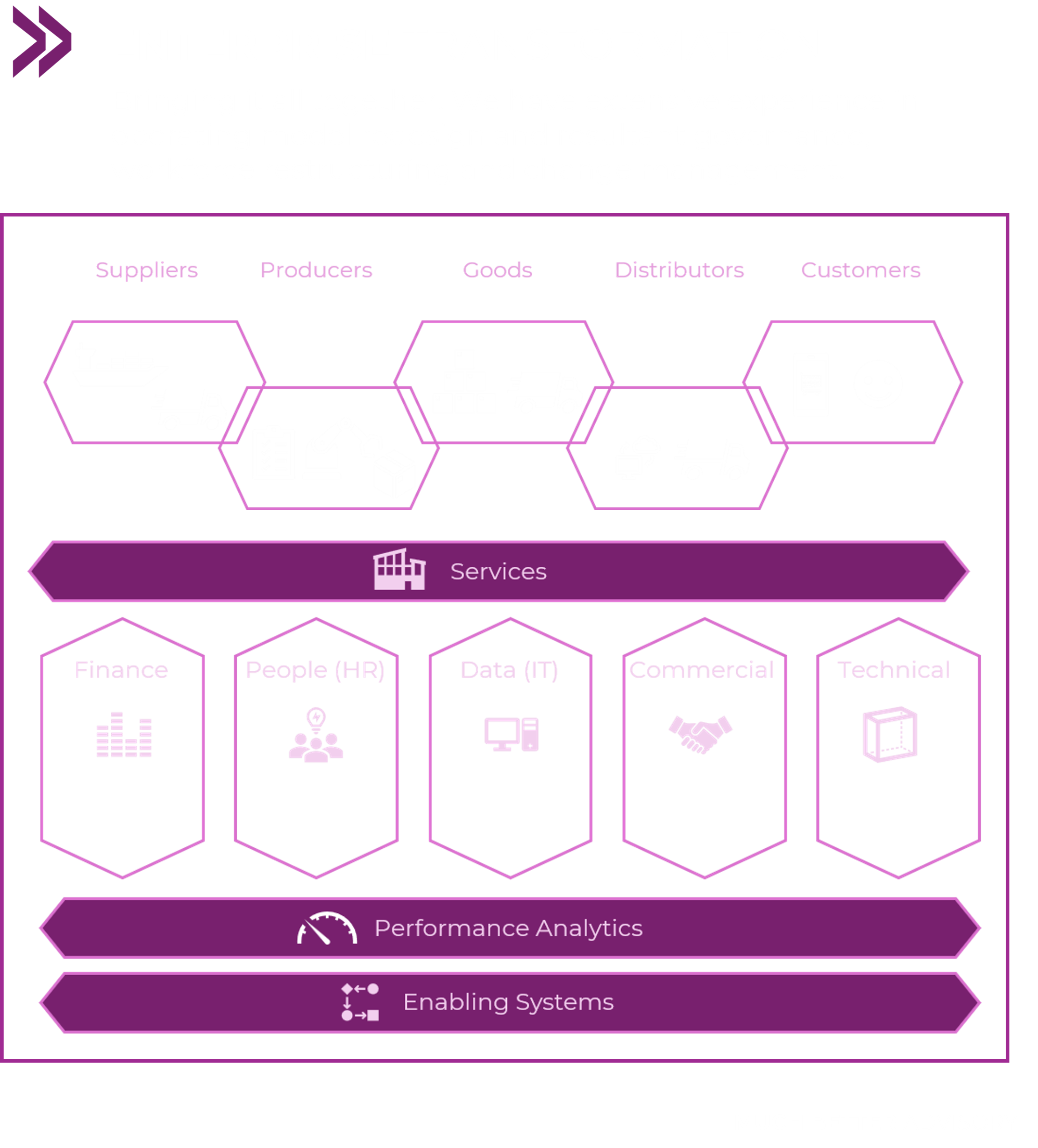
Our experience covers the full value chain and enabling functions.
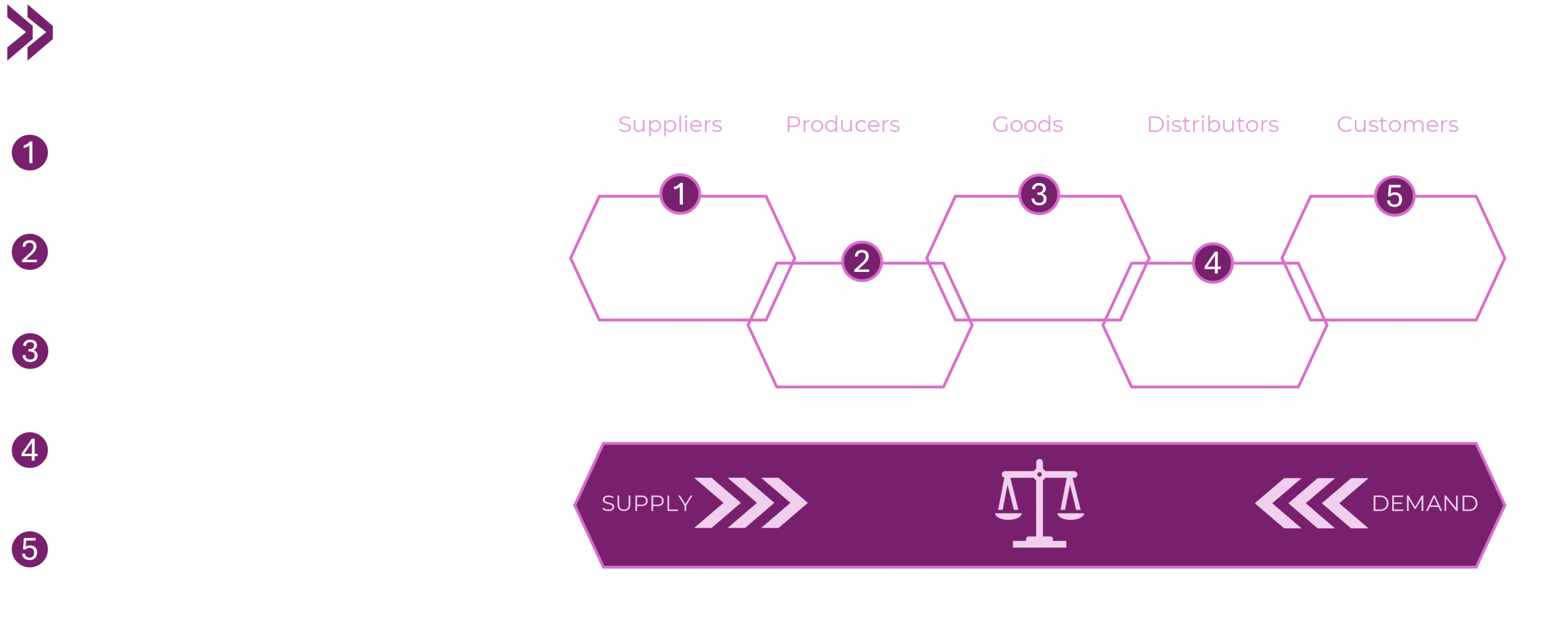
Enabling functions include Finance, HR, Commercial and IT. These specialisms are increasingly important as emerging technology such as AI becomes more advanced. Well designed functions are the back-bone to any organisation and protect value destruction.
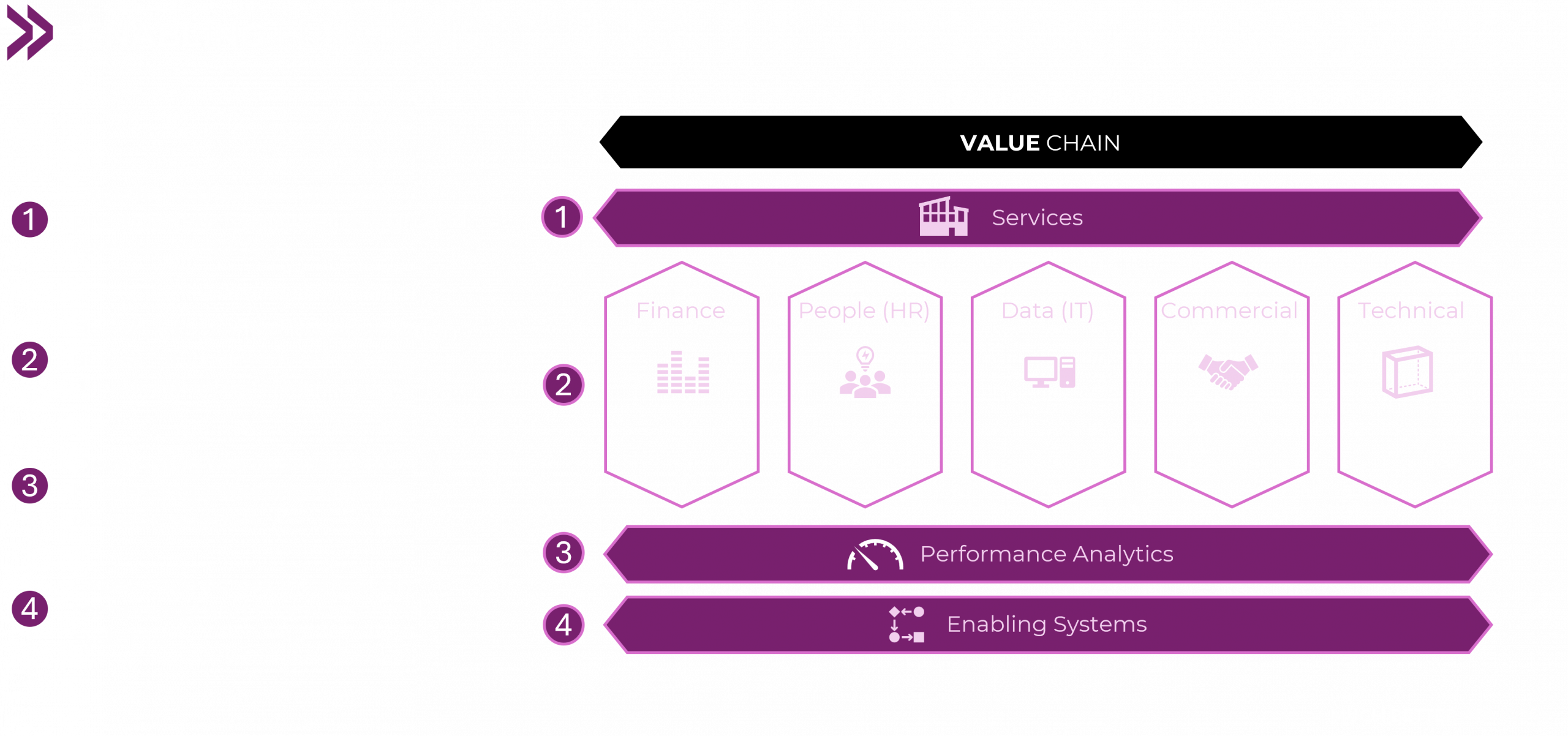
Bringing it all together across the enterprise.
Operating Model – By bringing value chain and enabling functions together, we address the full operating model and deliver truly enterprise wide solutions.
AI – With the emergence and advent of AI, there is an opportunity to improve productivity without harming innovation and creativity. Yet most organisations have not understood their operating model and thus are unlikely to fully exploit these technologies.
Capability – most organisations have not sufficiently addressed their workforce capability or reviewed their processes. We understand this and bring multiple decades of experience to set the right foundations for successful change and avoid ‘layering‘ which creates 80% of transformation failures.
Sharing and collaboration – Duplicating resources is expensive and highly inefficient. Much better advisory has extensive experience in shared services including design, technology and operation.
Method
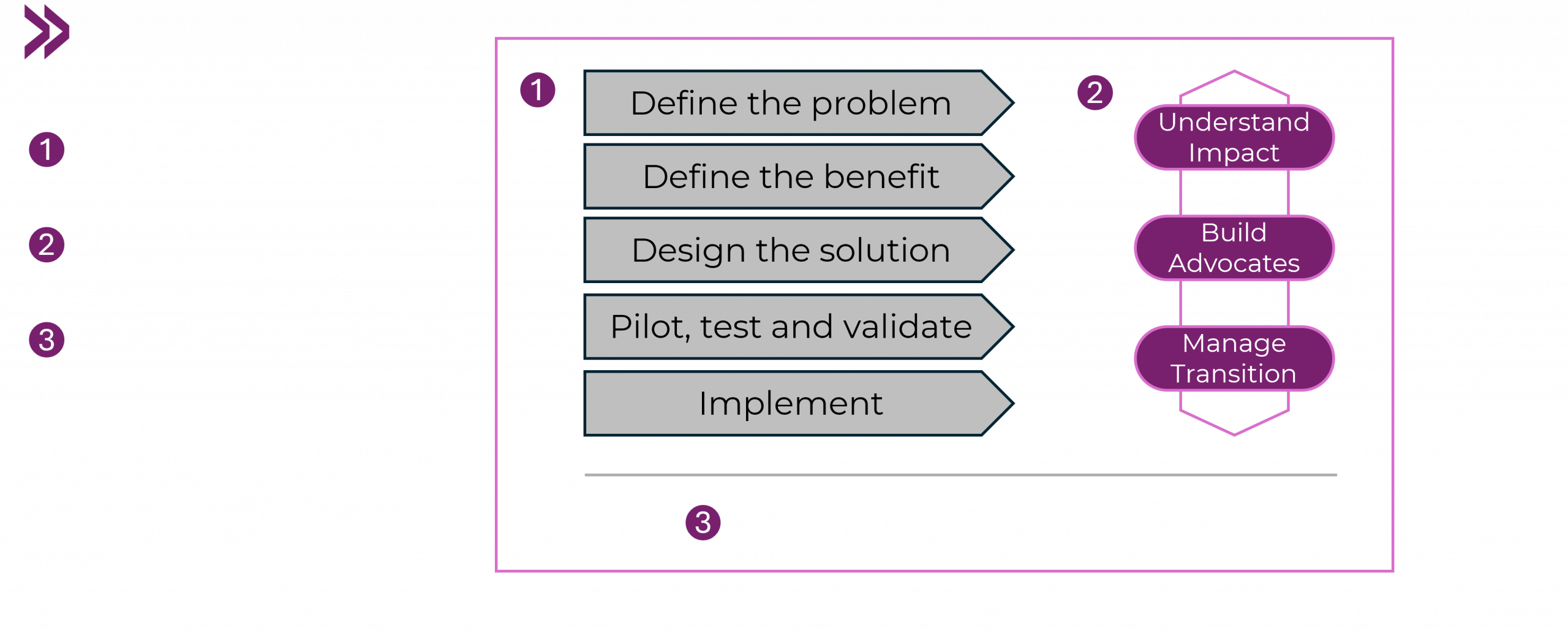
We have a consistent method that allows us to flex across a wide range of tools and techniques
Sectors
We have experience across most sectors, the most significant are below.
Differentiators
What sets us apart, why do we think we’re different?
Our philosophy is founded on the word ‘Better’ which is a high bar with potentially high stakes.
On the basis that happiness can be achieved by removing all things that make you unhappy, we believe you can be better by removing all things that make you worse. Let’s explore this some more:
Organisation Redesign
- We only use the current organisation chart and detail to understand the current state. After that we don’t look at it, otherwise it will bias our thinking and lead to organisation design by personality not capability. This is a common mistake that leads to organisations being based on who we like instead of who is best to do the role.
- We use proprietary analysis to understand the core / priority activities and then consider how these can be delivered. The rest is non-core and should be considered for outsource, deletion or consolidation.
- We avoid templates i.e. Centralised, Federated, Matrix but instead set rules that create design principles. This is achieved in a collaborative manner with the workforce. We find this reduces resistance and increases the chance of adoption before its even rolled-out.
Operating Model
- We look at operating models as the enterprise wide system of generating value. Not just financial, but environmental, societal and people. Each of these represents a stakeholder of your business.
- In our view, there is no such thing as a standard operating model , your business has its own unique operating model. Which in turn drives your business model and your revenues.
- Most ERP systems will require you to standardise processes within your operating model, where this is not achievable it will lead to higher implementation costs.
- Once you have finalised your operating model, you are better placed to look at your workforce structure, enablers (i.e IT) and geographies.
- A good operating model is demand centred.
Enterprise Change
- Change management is not the same as Project management. Nor is it about just ‘good comms’, or even worse consulting with your workforce after you’ve decided on the change
- .We consider change as hard, not soft and fluffy, because it must be based on measurable results linked to a clear business case.
- Much better has a proprietary change approach that is based on a hybrid of methods. Our focus is on three people based factors. How fast does the change need to happen, how many will be affected and how well must they perform.
- Much better considers itself highly experienced in the techniques of change management.
Process Improvement
- Process Improvement is the root of all business success. Ignore it at your peril.
- We have worked with over 100 organisations and improved processes across all functions and operations.
- We use a specific method to capture processes so that they can be easily translated into use by technology (such as LLMs / ERPs), as training guides and to identify control and integration points.
- Well designed processes reduce inefficiency, enable continuous improvement and allow organisations to get on and deliver to their customers.
Layering
- Layering occurs when you design a change to an organisation without validating its impact.
- This can be anything from restructuring, new processes or new systems
- When you come to implement the change, it will become a new ‘layer’ over the existing structure. Despite you believing it’s going to make a difference, there is a high chance the organisation will try and continue with its previous ways of working.
- Thus you have created an additional burden on the organisation. It is now trying to ‘work around’ your new change or even worse ignore it all together.
- The next worse thing, is an attempt to force the change by creating yet another layer, often this is in the form of management. Now we have multiple layers and more complexity.